
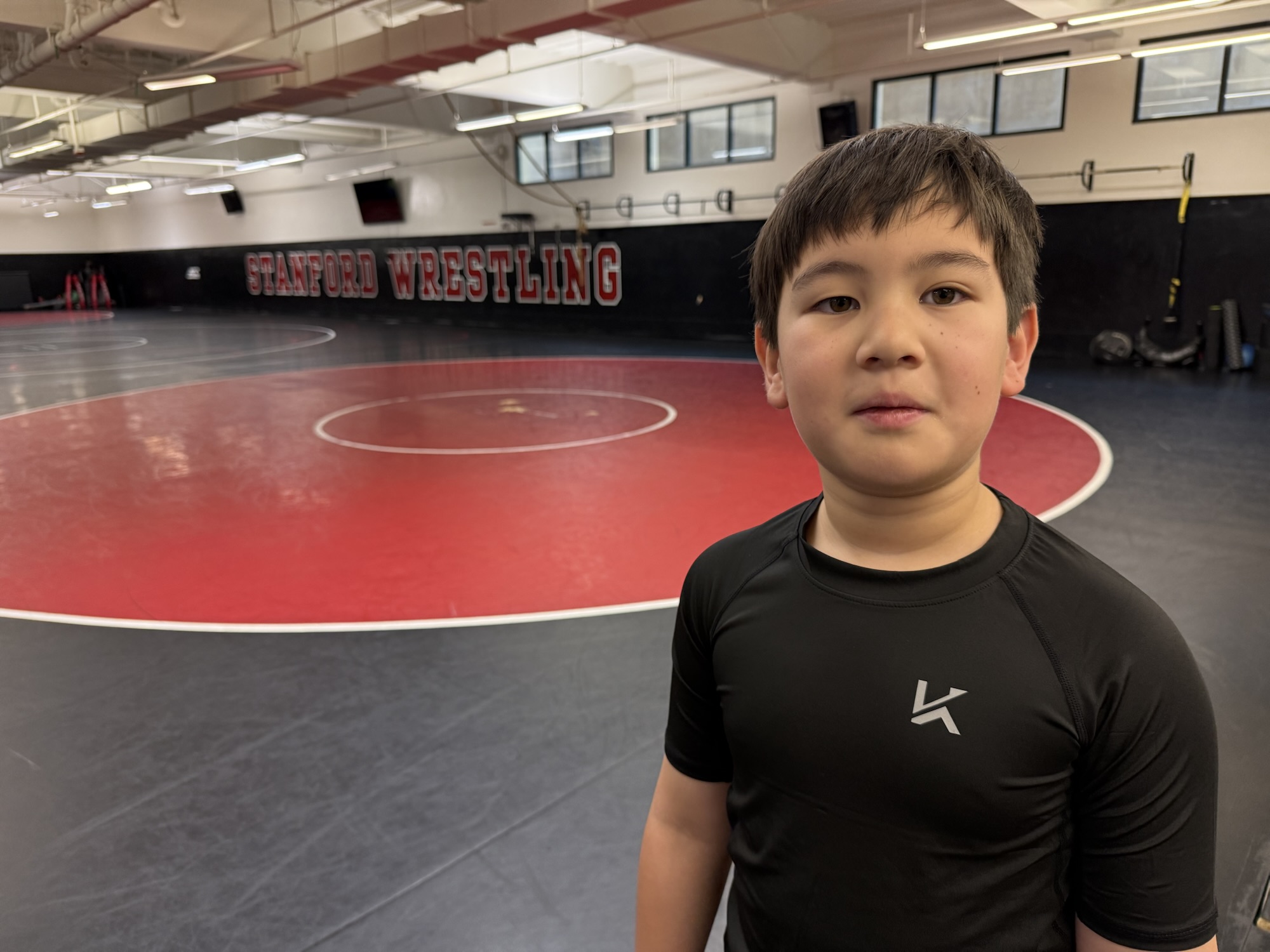
I’m here early on a Sunday morning watching you train, after you woke up early, woke me up and stood at the door waiting to go. I have time so I wanted to capture a series of thoughts while they were present in my mind. A father’s note to my son, a guide to myself, and a standard I’m willing to be judged by.
Son,
You’ve been in this world since you were two. Judo first, then wrestling, then the daily habit of watching matches and talking about the game. You love it. I love that you love it.
I also know the risk. When a father is competent and invested, the line between support and pressure can blur without anyone intending it. Excellence can become a demand. A childhood can quietly become a template. A family can start calling a program “love.”
So I’m writing this as a contract. Not for you to carry. For me to carry. It’s a promise about how I will show up for you over the long run.
My governing frame is simple: Temperance is my brake. Humanity is my compass. If I’m honest, those two, applied consistently, prevent most of the damage parents do in the name of helping.
First principles: what I’m actually trying to build
I’m not building trophies.
Trophies can happen. Winning is real. Competing is a craft. But those are outputs. The point is your life.
So here’s the aim I renew every week:
Health. You are intact at 18, and you still want to train at 28. Competence. Real skill that survives pressure, not “kid dominance.” Stability. Pressure doesn’t get to decide who you are. Character. You are good under stress. You treat people well when you’re up, down, tired, frustrated, or scared.
If we ever have to choose, I choose those four. Every time.
This is my first promise: I will not trade your long horizon for my short horizon.
My roles, your safety
In your week, I can be four different people:
Dad. Unconditional belonging. Coach. Standards, teaching, accountability. Training partner. Shared work, respect. Opponent. Controlled adversity.
Most parent-athlete damage comes from one thing: role leakage. Opponent energy leaking into Dad. Coach energy leaking into Dad. The relationship becoming conditional without anyone saying it out loud.
So this is the rule I bind myself to:
When training ends, I return to Dad immediately.
No sulking. No coldness. No distance as punishment. No silent disappointment. If I feel frustrated, I will own it privately. I will not make you manage my emotions.
If I violate this, you get a simple override phrase. You can say, “Back to Dad.” I’m agreeing now that I will hear it and adjust, not argue.
Temperance and Humanity: the operating definition
Temperance means I do not escalate simply because I can. I do not chase intensity for its own sake. I do not confuse “more” with “better.” I keep my ego on a leash, especially around you.
Humanity means you are not my project. You are a person. You get agency. You get dignity. You get to be a whole human, not a perpetual athlete.
If I’m faithful to those two, most of the other rules become obvious.
The three dials I control, and the one I respect most
Every activity we do has three dials:
Volume: how much we do. Intensity: how hard it is. Meaning: what it means when you win or lose.
Volume and intensity can injure the body. Meaning can injure the self.
So this is a core clause of the contract:
Your belonging does not move with results.
Not after wins. Not after losses. Not after a bad day. Not after a rough attitude. Standards exist. Consequences exist. Coaching exists. But love is not a tool in the program.
If you ever feel you have to perform me back into warmth, then I have failed at the most important job.
Pressure: teacher, not judge
I believe in pressure, handled correctly. It reveals. It sharpens. It teaches fast.
I also know its failure mode. Pressure can become a courtroom where identity is on trial.
So this is the principle I commit to teach by example:
Pressure is information. Mistakes are data. Winning is a snapshot. Character is the series.
When something goes wrong, we won’t dramatize. We’ll ask one practical question:
What happened, and what is the smallest change that improves the next rep?
This is part of my creed in practice: endure, choose true, solve real, return. The return matters most. Return to calm. Return to learning. Return to the relationship.
Our rivalry: how it stays healthy
I like that you want to beat me. That fire is good. A healthy rivalry can be a powerful teacher.
But rivalry becomes toxic when it turns into a measure of worth, a measure of love, or a permanent mismatch that teaches helplessness.
So I’m committing to three things.
I will not farm easy wins off you
When we compete, my job isn’t to prove I can beat a nine-year-old. My job is to create problems that make you better.
That means I’ll use handicaps intelligently. I’ll restrict myself in ways that create real puzzles you can solve. No fake victories, and no patronizing.
You will earn real wins
Not gifts. Not “I let you.” Real wins where you solved something correctly and I couldn’t stop it.
When you win, I will be steady. I will not get weird. I will not sulk. I will be proud in a way that feels safe.
I will model losing like an adult
Not theatrically. Honestly. You need to see that losing is survivable, normal, and not shameful, and not identity.
If I ever feel threatened by your growth, that is my work to do privately, away from you.
This is how I keep rivalry aligned with 自他共栄. We raise each other. We do not consume each other.
The predictable pathologies, and the ones I promise to notice early
I’m naming these because naming creates accountability.
Outcome addiction
You start needing wins to feel okay.
My response: I will praise choices, composure, learning speed, and courage more than medals. Competitions are experiments, not verdicts.
Identity fusion
You become “the athlete,” and everything else shrinks.
My response: I will protect a second pillar. Friends. Curiosity. Building things. Reading. Whatever is yours. I will not panic if you diversify.
Approval entanglement
You perform to manage my emotions.
My response: I will not use disappointment as fuel. I will not make you chase my mood. I will not make love feel earned.
Chronic bracing
Tension becomes a lifestyle, disguised as toughness.
My response: recovery is training. Play is training. Calm is a skill we practice deliberately, not something we hope appears.
Moral drift under pressure
Competition turns into contempt, bullying, cheating, or unsafe behavior.
My response: respect is non-negotiable. I will not celebrate cruelty. I will not excuse bad sportsmanship because you “wanted it more.”
Adult shortcuts too early
Peaking too soon. Treating your body like disposable equipment. Hiding injuries. Risky weight manipulation.
My response: we do not do reckless shortcuts. Pain gets reported. We adjust without shame. We protect the future.
Coaching and tournaments: my car ride rule
The car after competition is where parents do unnecessary damage. Emotions run hot. Adults talk too much. Kids absorb poison or shut down.
So here is my rule:
In the car, I am Dad, not coach.
After an event you will always hear some version of this:
“I love watching you do hard things.”
“Do you want feedback, or do you want food and quiet?”
If you choose feedback, you get one strength and one correction, and then we stop. No lecture. No autopsy. No doom.
Timed precision work: what it is for, and what it is not for
We also do timed, consequence-flavored precision work. For me the lesson isn’t the object. It’s the discipline.
Calm attention under pressure. Decision-making. Controlled tension and relaxation. Patience with the eyes. Respect for rules. Respect for reality.
I’m also clear about the risk. Adults can turn this domain into status, bravado, or identity theater. That will not be our story.
So this is my contract around that training:
We will be lawful and safe. Procedures are never optional, not once, not “because we’re good.” We keep ego out of the story. No machismo. No bragging. No performance of toughness. Time pressure is a tool, not a test of manhood. If I ever sense you are drawn to it for approval, status, or excitement, we pause and reassess. I do not push through that signal.
My job is not to make you hard. My job is to make you steady.
The weekly check-in: your voice, my listening
Once a week, same day, five minutes, you get a voice. I’m not simply running a program.
I will ask:
What was most fun this week? What felt hardest? What do you want to improve next week? Does anything hurt or feel weird?
Then I will listen like it matters, because it does.
If you say you are tired, or something feels off, my default is to believe you, not interrogate you like you are bargaining.
How you can hold me accountable, without penalty
This contract is only real if you are allowed to call me out.
So you get phrases that work as overrides:
“Back to Dad.” When I’m leaking coach or opponent into the relationship. “Too much meaning.” When results are starting to feel like identity. “I need it to be fun again.” When joy is drying up. “My body feels weird.” When we need to adjust. “I want to choose.” When you need agency, not a script.
If you say those things, my job is not to defend myself. My job is to adjust.
The deepest promise: you are allowed to change
You love these activities now. I love that you do.
But the highest form of fatherhood is not producing a champion. It is producing a person who trusts himself.
So here is my promise to future you:
If you ever want to pause, pivot, or quit, I will not shame you. I will not treat it like betrayal. We will talk. We will make a plan. We will keep your dignity intact.
My job is not to own your path. My job is to help you build a self that can choose a path freely.
Closing: why I’m writing this
I’m 53. I’ve been on the long arc of this life. Early competition. Years of grappling. Now a body and mind that still perform well because I learned how to be sane about intensity.
I want you to inherit the best parts without inheriting the hidden costs.
So here is the vow that ties everything together:
I will be the kind of father whose presence makes you braver, not the kind of father whose approval makes you afraid.
And when I fail, because I will sometimes fail, I will repair quickly and without pride, because the relationship matters more than any program.
That is the contract I make with you, and the one I make with myself. This is as much of a note for myself as it is for you, and I’m writing to give myself something else to do while you’re being coached ;-).
-Jason (Dec 2025)
Leave a Reply